
Golden Hour vs Blue Hour in Devon: A Field Guide to Lighting Dartmoor and the Coast


Devon possesses some of the most dramatic landscapes in the United Kingdom. From the raw, weathered granite tors of Dartmoor National Park to the sweeping coastal cliffs of the South Hams, the terrain offers endless possibilities for photographers.
However, capturing these locations effectively relies entirely on understanding how quality of light changes throughout the day.
Many photographers pack away their cameras the moment the sun dips below the horizon. By doing so, they miss half of the story. Both golden hour and blue hour offer unique creative opportunities, but each requires a distinct approach to camera settings, location selection, and visual composition.
The Gear You Need for Low Light Landscapes
Navigating Dartmoor tors or rocky coastal paths during twilight presents distinct physical and technical challenges. Carrying the correct kit ensures you capture clean exposures while staying safe on location.
A Sturdy Tripod: Dartmoor is notoriously windy. A light travel tripod will cause camera shake during longer exposures. Choose a stable, weighted setup.
Neutral Density (ND) and Graduated ND Filters: Essential for balancing the bright sky against dark moorland foregrounds during golden hour.
A Circular Polariser: Vital for coastal scenes to cut through glare on wet rocks and sea spray.
Offline Navigation: Mobile signal drops quickly across Dartmoor. Always use offline Ordnance Survey maps and applications such as PhotoPills to plan the position of the sun.
A Reliable Headtorch: Navigating off the moor after a blue hour session requires hands free lighting.
Part One: Mastering Golden Hour
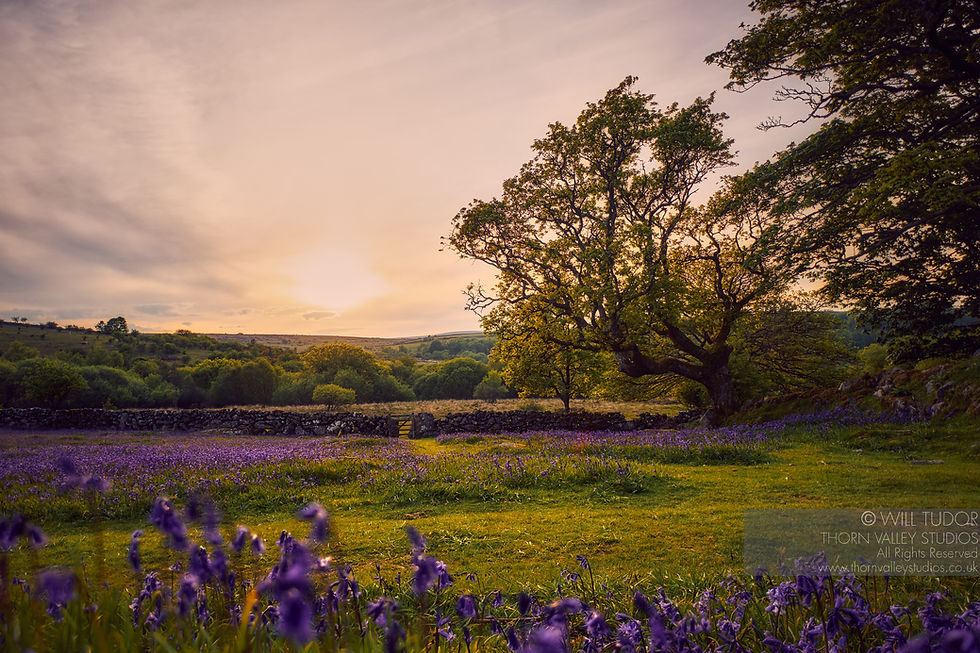
Golden hour occurs twice daily, during the first hour after sunrise and the final hour before sunset. As the sun sits low in the sky, sunlight travels through more of the atmosphere, scattering harsh blue wavelengths and leaving warm red, orange, and yellow tones.
Quick Golden Hour Specifications
Ideal Conditions: Clear skies with light cloud cover to catch warm light
Aperture: f/8 to f/11 for front to back sharpness
ISO: Keep at native base (ISO 64 or 100)
Key Technique: Use low angle side light to reveal physical texture on granite and gorse
Golden Hour on Dartmoor: Haytor and Hound Tor

The eastern edge of Dartmoor features iconic granite landforms that react spectacularly to low sunset and sunrise light.
Haytor: As Devon's most famous landmark, Haytor's massive twin rock outcrops catch the warm evening glow exceptionally well. Position yourself to shoot east to west during sunset, using low raking light to emphasise the weathered grooves of the granite while framing the rolling valley below.
Hound Tor: The expansive rock settlement of Hound Tor offers endless foreground options. During golden hour, side light casts long, dramatic shadows through the central granite avenues, giving the entire outcrop a sculpted, three dimensional quality.
Golden Hour on the South Coast: Teignmouth and Bigbury on Sea

Coastal golden hour behaves differently to the moors. Tidal sands, sea mist, and Victorian seaside architecture reflect light back into your lens, doubling the luminosity of the scene.
Teignmouth: Exceptional for sunrise golden hour. Position yourself along Back Beach or near the Grand Pier as the sun rises over the horizon. Low morning side light catches the red sandstone cliffs of Ness Head, casting rich copper and gold reflections across the mouth of the Teign Estuary.
Bigbury on Sea: Ideal for sunset photography. Timed right at low tide, the causeway connecting to Burgh Island creates striking leading lines. The setting sun casts a deep golden reflection across the wet tidal sands, while backlighting the iconic outline of the art deco hotel and sea tractor.
Part Two: The Forgotten Atmosphere of Blue Hour
Blue hour occurs roughly twenty to forty minutes after sunset, or before sunrise. With the sun below the horizon, the sky produces indirect sunlight that turns a deep, saturated indigo and violet.
While golden hour focuses on warmth, high contrast, and texture, blue hour produces tranquility, mystery, and smooth tonal gradients.
Blue Hour on Dartmoor: Ausewell Wood and Wistman's Wood

Dartmoor's ancient woodland sites shift completely after sunset. Shadows dissolve, replaced by a soft, diffused ambient light that brings out ethereal cool tones throughout the canopy and forest floor.
Ausewell Wood: High above the River Dart, the rocky crags and ancient woodland canopy of Ausewell thrive under blue hour lighting. The cool, indirect skylight softens contrast between the dark woodland floor and open valley views, allowing long exposures to capture atmospheric mist drifting through the gorge.
Wistman's Wood: Shooting this ancient high altitude oak woodland during twilight accentuates its legendarily eerie atmosphere. The soft indigo skylight illuminates the damp green mosses, lichens, and twisted dwarf oak branches without harsh highlights, creating balanced exposures that look like a scene straight out of folklore.
Blue Hour on the Coast: Challaborough Bay and Plymouth Sound

Coastal blue hour shines brightest where raw natural shores meet the atmospheric reflections of water and coastal light.
Challaborough Bay: Position yourself along the rocky outcrops of Challaborough as twilight settles. The lingering indigo sky reflects off the wet reefs and tidal pools, while long exposures turn the crashing Atlantic waves into a soft, ethereal mist against the dark silhouettes of the cliffs.
Plymouth Sound: Set up along Plymouth Hoe or Mount Batten Pier just after sunset. The cool indigo sky creates a striking visual harmony with the warm sodium and tungsten glow reflecting across the open waters of the Sound, capturing both natural beauty and maritime heritage in a single frame.
Technical Control: Exposure and White Balance Strategy
Capturing light at the edges of the day requires moving away from automated camera settings.
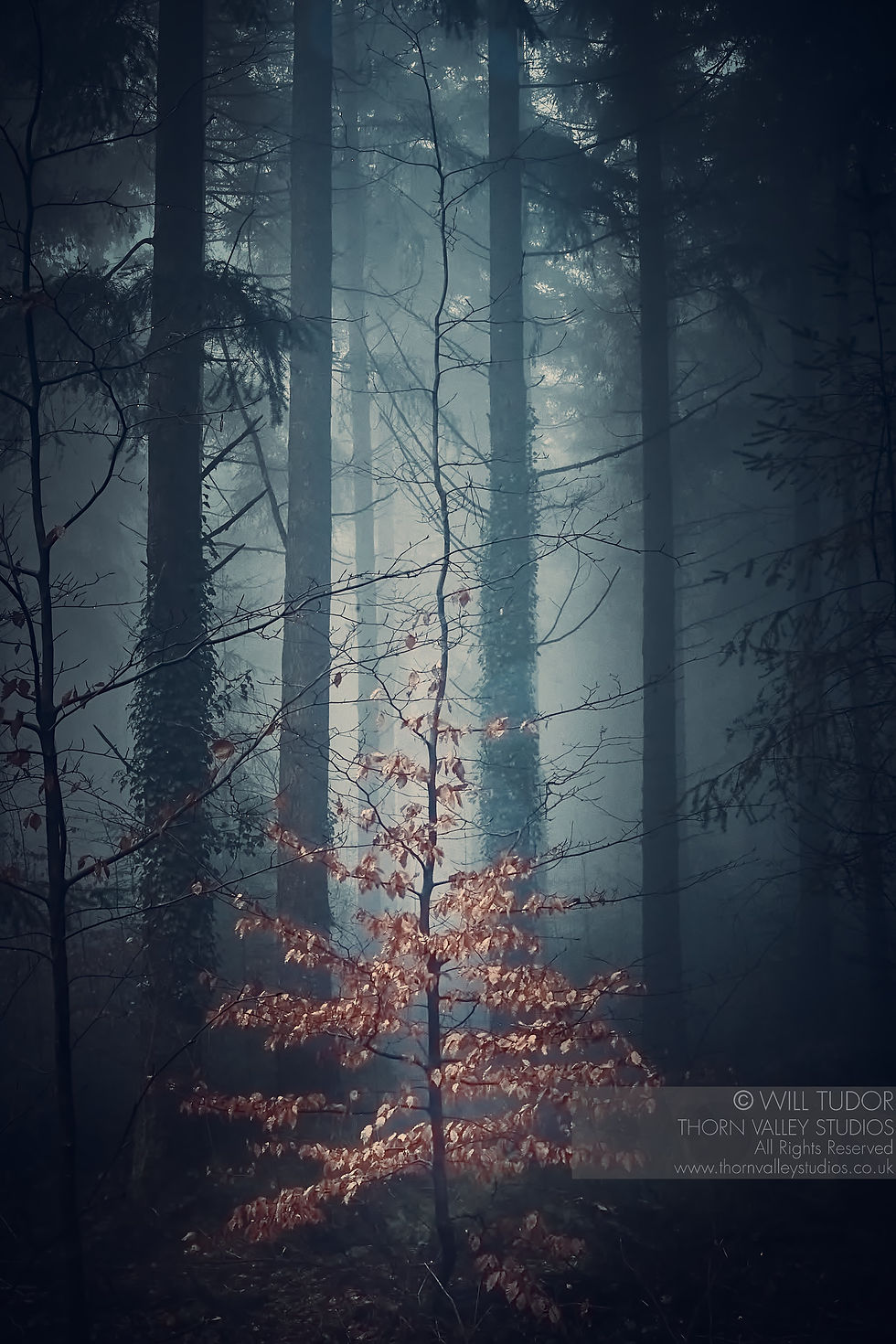
Avoid Auto White Balance (AWB): Automatic white balance algorithms attempt to neutralise colour casts. They will strip away the golden warmth of sunset or turn blue hour shots into a muddy grey. Set your white balance manually to Daylight (5500K) for golden hour, and shift to Shade (7000K) or Tungsten (3200K) during blue hour depending on whether you want to emphasise or cool down the ambient light.
Expose for the Highlights: Low light scenes feature wide dynamic range. Check your highlight clipping warnings (blinkies) and histogram to ensure you do not blow out the setting sun or clip shadow details in the foreground.
Shoot Exclusively in RAW Format: RAW files preserve all colour and dynamic range data, allowing you to recover shadow details cleanly during post processing.
Taking Your Field Skills Further

Reading about field techniques lays the groundwork, but adapting to Dartmoor's rapidly changing weather on location is where genuine skill develops.
Thorn Valley Studios offers dedicated one on one and small group Outdoor Photography Masterclasses across Dartmoor National Park and the South Devon coast. Whether you want to master manual exposures, refine your compositions, or navigate challenging low light conditions, sessions are tailored directly to your individual level.
Book an Outdoor Photography Masterclass today or view our flexible hourly tuition options to elevate your landscape photography.


Comments