
Can a Torn Photo Be Restored If Pieces Are Missing?


It is a heartbreaking but incredibly common moment. You are going through an old box of family keepsakes, find a priceless portrait of a great-grandparent, and lift it out, only for a brittle corner to snap off. Or worse, you realise a piece of the photograph is already gone, lost to time, dampness, or a silverfish infestation decades ago.
When a photograph is physically torn and pieces are entirely missing, your first instinct might be grief, followed closely by a sense of finality. You assume that because the physical paper is gone, the image is gone forever.
The short answer is yes; a torn photo can absolutely be restored, even if significant pieces are missing.
However, the how matters immensely. Achieving a seamless restoration requires a blend of digital artistry, historical knowledge, and human anatomy. Here is how professional, non-AI manual restoration brings missing pieces back to life.
The Digital Reconstruction Process: How We Fill the Gaps
When we restore a severely damaged photo at Thorn Valley Studios, the original physical photograph is never altered or harmed. Instead, we capture an ultra-high-resolution digital archive scan. All the reconstructive "surgery" happens digitally, pixel by pixel.
Depending on where the photo is torn, we use a few different advanced restoration techniques:
1. Mirroring and Cloning (For Backgrounds and Clothing)
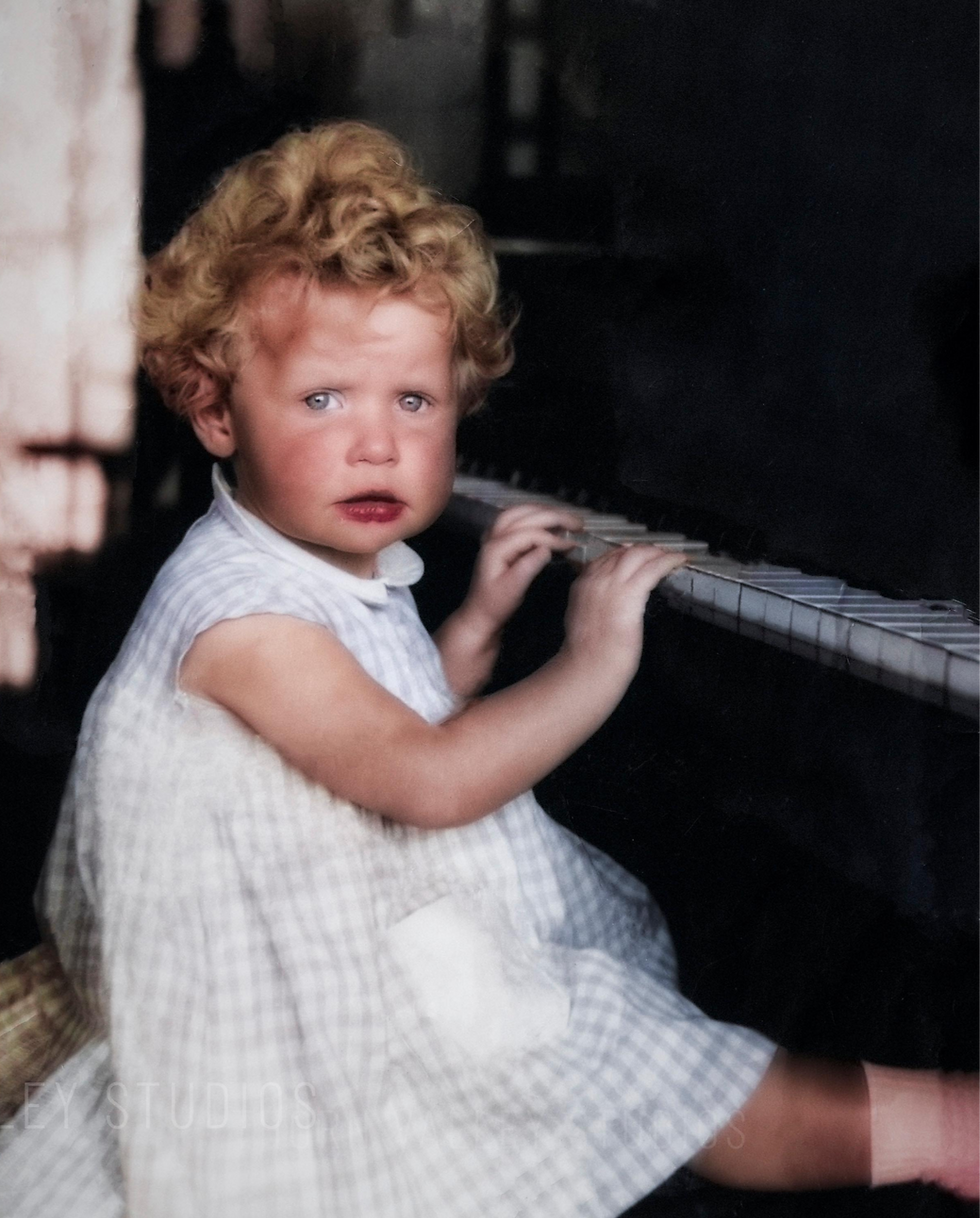
If a piece is missing from a predictable area, such as a suit jacket, a brick wall, or a grassy field, we look for clues within the surviving parts of the photograph.
By carefully sampling textures, fabric weaves, and lighting angles from the intact side of the photo, we can clone and blend those elements into the blank space.
The result is a mathematically and visually consistent continuation of the original scene.
2. Historical Research (For Objects and Uniforms)
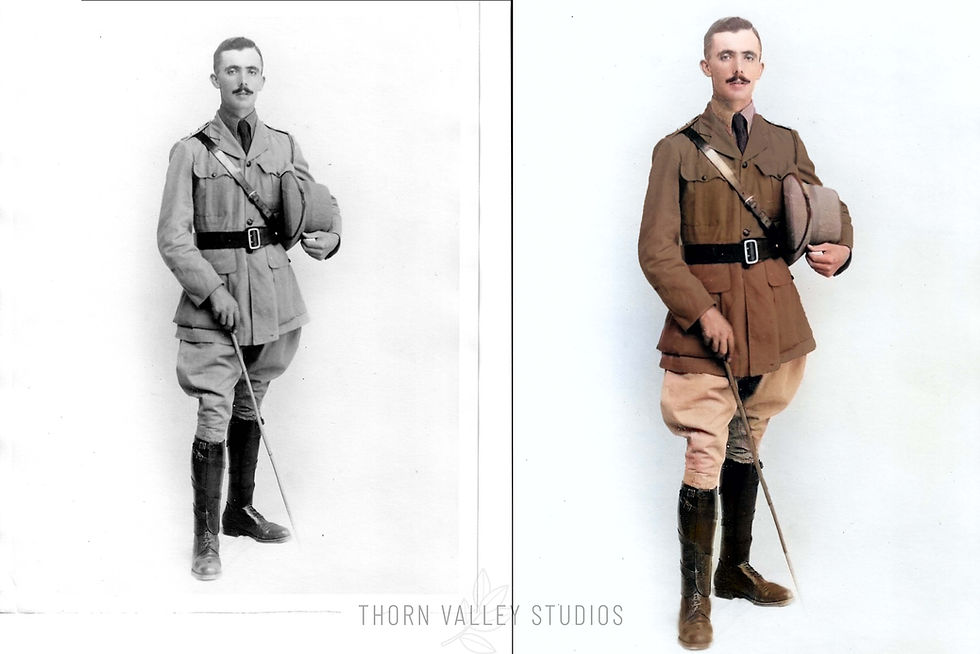
What happens if a piece is missing from something specific, like a military medal, a vintage car, or a piece of period jewellery?
Rather than guessing, we research the specific era. If we know the subject was in a particular regiment during WWII, we can look up pristine archival images of that exact uniform or medal.
We then use that historical reference to hand-draw and texture the missing elements back into the image with historical accuracy.
3. Anatomical Reconstruction (The Hardest Part: Faces)
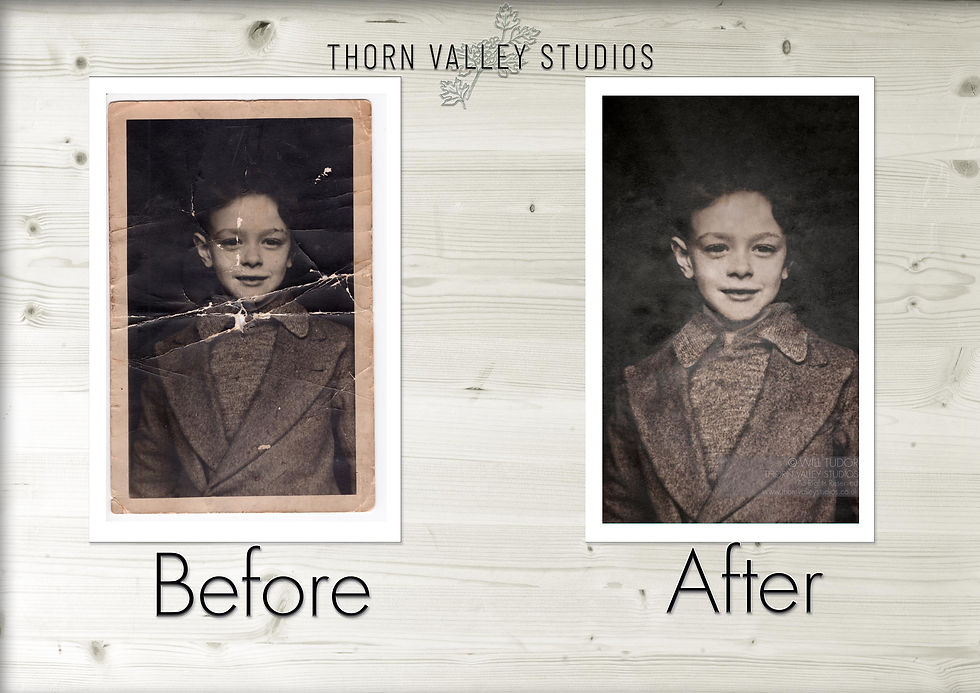
The most challenging scenario is when a tear passes directly through a facial feature, like a missing eye, half a nose, or a portion of a smile.
This is where a human technician’s skill becomes irreplaceable. We use our deep understanding of facial anatomy, bone structure, and how light creates shadows across a face to manually paint the missing features back in.
If you have reference photos of the same person at a similar age, or even photos of a sibling or child who shares strong family resemblances, we can use those as blueprints to ensure the restored face looks genuinely like them.
Why AI Tools Completely Fail at Missing Pieces
It is tempting to upload a torn photo to a free online "AI photo fixer." However, when a piece of a photo is missing, AI doesn't know how to handle the empty space.
If a piece is missing from... | How Free AI Tools Handle It | How Thorn Valley Manual Restoration Handles It |
A Suit or Dress | Smudges the area or turns it into a blurry, plastic-looking blob. | Digitally weaves the exact fabric texture and matching folds back together. |
An Eye or Mouth | Hallucinates a completely random, modern stranger's eye over the gap. | Uses family references, anatomy, and lighting to rebuild their authentic features. |
The Background | Creates bizarre, surreal digital artefacts that ruin the historic feel. | Clones the original paper grain and environment seamlessly. |
A Case Study: What Is Possible?

Take a look at this breakdown of what can be saved based on the severity of the damage:
Minor Damage (Corners, borders, clothing): 100% Restorable. These are highly straightforward fixes that can be made to look as though the damage never happened.
Moderate Damage (Backgrounds with complex textures, non-critical facial areas): 95% Restorable. Requires detailed manual painting and texture matching to blend perfectly.
Severe Damage (Crucial facial features missing with no reference photos): Highly Restorable. While we cannot invent a face from absolutely nothing, if we have a secondary photo of the person, even from a later stage in life, we can accurately reconstruct the missing pieces of their portrait.
Don't Throw Away Your Family History

If you are holding a photograph that is torn into multiple pieces, or one where chunks of the paper have crumbled away, please do not discard it. Keep all the loose pieces together in a dry, acid-free envelope. Even the smallest fragments can provide vital clues regarding texture, contrast, and colour for the final restoration.
Every photograph deserves to have its story preserved for the next generation, completely free of distorted AI algorithms and plastic finishes.


Comments