
Beyond the Click: How Photography Turns Creative Kids into Curious Scientists
- Will Tudor

- Jul 7
- 3 min read
Have you ever looked at a photograph and wondered how a single moment in time gets trapped inside a little plastic box?

For kids aged 6 to 14, a camera isn’t just a gadget, it’s a superpower. It completely changes how they see the world. Suddenly, a standard walk across the local park or a trek through the atmospheric British countryside becomes a treasure hunt for light, textures, shapes, and stories.
If your child is constantly grabbing your phone to snap photos, or if you have a simple digital point-and-shoot camera gathering dust, they are sitting on the ultimate hands-on learning tool. Here is how a basic camera can unlock an entire world of creativity, and how you can seamlessly weave it into your home education rhythm.
The Magic of the "Simple Camera"

You don’t need a £2,000 professional setup with massive lenses to be a photographer. In fact, starting with a simple camera, like an old digital compact, a basic smartphone, or a budget instant camera, is actually better for learning.
Without a hundred complex settings to worry about, young eyes can focus on the absolute core of fine art photography: Composition and Light.
1. The Noughts-and-Crosses Grid (A Maths Cheat Code)
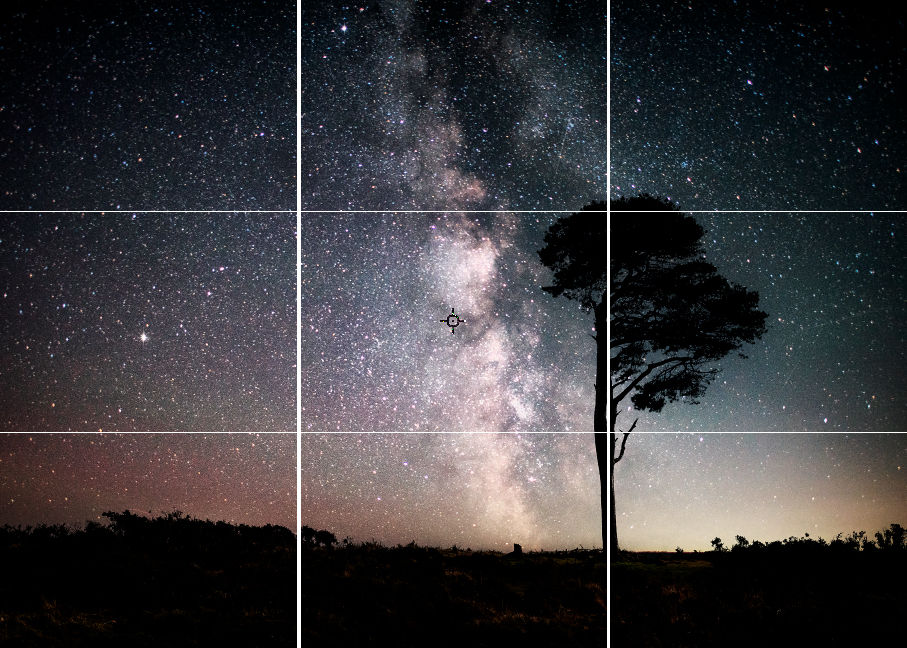
Want to make a photo look like a cinematic movie poster? Have your child imagine a noughts-and-crosses grid over their screen (two vertical lines, two horizontal lines).
Instead of putting the subject dead centre, try placing it where the lines cross.
For ages 6–9: Think of it like balancing a see-saw. It makes the picture feel exciting!
For ages 10–14: This is called the Rule of Thirds. It teaches them how to structure an image to guide the viewer's eye.
2. Chasing the "Golden Hour"

Light is a photographer's paint. Have your child take a photo of the same tree in the garden at midday, and then again right before sunset.
The Lesson: They will quickly notice how the harsh midday glare disappears, replaced by the long, dramatic, and warm light of the "Golden Hour". It’s an instant lesson in shadows, mood, and weather.
The Home-Ed Connection: Cross-Curricular Learning
For Home Educators, photography is a fantastic "stealth learning" tool because it effortlessly adapts to any age group, from Key Stage 1 through to Key Stage 3.
Subject | For the Younger Ones (Ages 6 - 9) | For the Older Ones (Ages 10 - 14) |
Science & Physics | Texture & Seasons: Going on a "sensory safari" to photograph rough bark, smooth pebbles, and wet leaves. | Optics: Understanding how lenses bend light, how the human eye works compared to a camera sensor, and how light reflects. |
History & Social Studies | Family Archives: Taking portraits of family members or pets, creating a visual "day in the life" scrap book. | Visual Literacy: Analysing historical photographs. How did early photography change how we remember the past? |
English & Creative Writing | Phonics & Storytelling: Going on an alphabet hunt (finding things shaped like an 'A', a 'B', etc.) or telling a story using 3 photos. | Descriptive Writing: Using a mysterious, atmospheric photo they took outdoors as a prompt for a short story or poem. |
Maths & Geometry | Shape Spotting: Hunting for circles, triangles, and rectangles in nature or around the house. | Angles & Symmetry: Exploring parallel lines, reflections, tessellation, and perspective in local architecture. |
Pro-Tip for Home-Ed Parents: Don't worry about grading the technical perfection of the photos. Instead, spark a conversation by asking: "What caught your eye here?" or "What story are you trying to tell in this frame?" This builds critical thinking and verbal communication skills naturally at any age.
Ready to Explore the Wild?

At Thorn Valley Studios, we are surrounded by the untamed, dramatic landscapes of Devon, the atmospheric light of Dartmoor and the intensity of the South Devon Coast. We believe that every child, whether they are a curious 6-year-old spotting patterns in the moss or a 14-year-old framing up a cinematic landscape, has a unique way of looking at the world. Photography simply gives them the tools to share that vision.
By turning the camera around, kids learn patience, observation, and self-expression, while parents get a brilliant, multi-disciplinary tool that makes home education vibrant, interactive, and beautifully visual.
So, dust off that simple camera, step outside into the fresh British air, and start capturing the magic!



Comments